
Fire safety in composite materials is critical in building construction and requires careful selection of materials. While composite material has many advantages in terms of strength and flexibility, their behavior in a fire must be carefully examined to ensure the safety of buildings and its occupants. Here are some fire safety considerations for composite building materials.
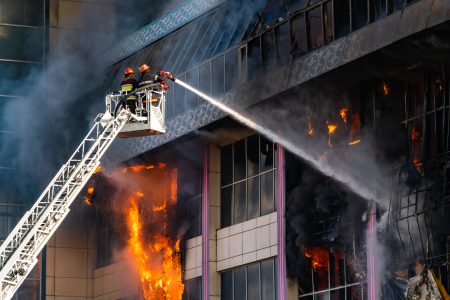
Fire Resistance
Depending on the type of fibers and resin that are used, composite materials can vary in their resistance to fire. For example, glass fiber composites are more fire-resistant compared to carbon fiber or aramid fiber. However, the type of resin used can directly impact the material’s combustibility and influence the fire behavior.
Though resins are often flammable, advances in composite technology have led researchers to develop resins with naturally flame-retardant properties, as well as composites that have non-flammable fibers. In addition, sustainable composites are becoming more popular as these materials are often designed to have improved fire safety characteristics while also being environmentally friendly.
Flame Retardants
To enhance fire safety, manufacturers often incorporate fire retardant directly into the resin. This helps prevent combustion and also reduces the spread of flames. Applying intumescent coatings on composite materials can also add a protective layer slowing fire spread.
Testing and Building Code Regulations
To ensure fire safety, composite materials should be selected according to local building codes and regulations. They should also be tested to determine their fire suitability for specific applications.
Professional Evaluation
Consulting with engineers, architects, and fire safety experts is always crucial when composite materials are going to be applied to a building structure. Castle Architectural Metals is here to help. Contact us at (516) 842-7650 or [email protected].